


A Smarter Event Strategy for 2026
- Barbara Hutniak

- Jan 5
- 3 min read
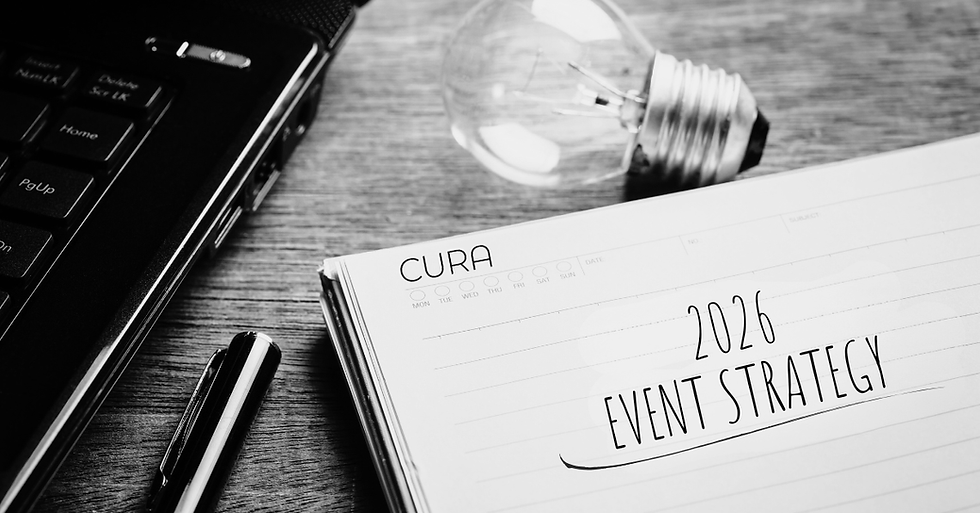
The strongest event programs are built in the first half of the year.
Brands that prioritize Q1 and Q2 set themselves up with better visibility, stronger assets, and more meaningful conversations that carry through the remainder of the year. Those that wait until H2 are often chasing momentum instead of creating it.
This is why a smart event strategy should be front-loaded, focused, and tied directly to business goals.
Start With a Realistic Event Cadence
A minimum of two events per quarter is a strong baseline for most growing brands, with an emphasis on additional focus in the first two quarters.
This cadence creates consistency without overextending internal teams or budgets. It also allows enough repetition to build momentum, relationships, and measurable outcomes, instead of treating each event as a one-off.
Not every event needs to be large or expensive. What matters is that each one has a defined role in your broader go-to-market strategy.
Front-Load Your Event Strategy in H1
Focusing investment in Q1 and Q2 is critical to setting the tone for the year.
The first half of the year is when:
Budgets are fresh
Sales teams are most aggressive
New initiatives and partnerships are being shaped
By prioritizing events early, you create downstream impact that carries through the rest of the year.
This is also the time to build and refine:
Booth assets and signage
Presentation decks and workshop content
Messaging and positioning that resonates in live conversations
Playbooks your sales and marketing teams can reuse
When done well, H1 events fuel H2 without requiring the same level of spend or effort.
Use a Mix of Event Formats, Not Just One
High-performing event strategies balance visibility and velocity.
Conferences play a critical role in:
Brand awareness
Category positioning
Establishing credibility and voice in the market
But conferences alone rarely move deals forward.
That’s where private events come in, including:
Executive dinners
Small workshops
Invite-only roundtables
These formats are designed to support existing prospects and clients through the pipeline, deepen relationships, and create space for meaningful conversations that don’t happen on a noisy show floor.
The combination matters. One builds awareness, the other drives progression.
Align Every Event to Your 2026 Business Goals
Events should never exist in a vacuum.
Before locking in sponsorships or venues, ask:
What is this event meant to accomplish?
Who is it for?
How does it support our 2026 growth strategy?
Goals might include:
Entering a new market or vertical
Accelerating enterprise sales cycles
Strengthening strategic partnerships
Retaining and expanding existing clients
When goals are clear, decisions around format, budget, and execution become easier, and ROI becomes far more defensible.
Measure Impact Beyond the Event Itself
The real value of an event shows up weeks and months later.
Instead of focusing solely on attendance or lead counts, look at:
Pipeline influenced
Deals accelerated
Partnerships initiated
Content and insights generated for future marketing
Fewer events, when measured properly, often outperform a packed calendar of disconnected activations.
A strong 2026 event strategy is not about doing more. It’s about doing the right events, at the right time, with clear intent.
By committing to a minimum of two events per quarter, prioritizing H1 investment, mixing conference visibility with private experiences, and aligning everything to your business goals, brands can make fewer events work significantly harder. That’s where real impact happens.
At CURA, we help brands design event strategies that deliver measurable impact. From identifying the right mix of conferences and private experiences, to front-loading investment in H1, and aligning every activation to your 2026 business goals, we act as a fractional event partner—guiding planning, execution, and post-event ROI tracking. Fewer events, smarter strategy, stronger results. That’s the CURA approach.


Comments